

Lock Repair Services — Fix Stiff, Jammed and Damaged Locks
Not every lock problem requires a full replacement. In many cases — particularly with older mortice locks, stiff mechanisms, and misaligned strikes — a lock repair is faster, cheaper, and just as effective as fitting a new lock. Our engineers diagnose the fault on arrival and give you an honest assessment of whether repair or replacement is the right approach. We never recommend replacement when repair will do the job.
Common Lock Problems We Repair
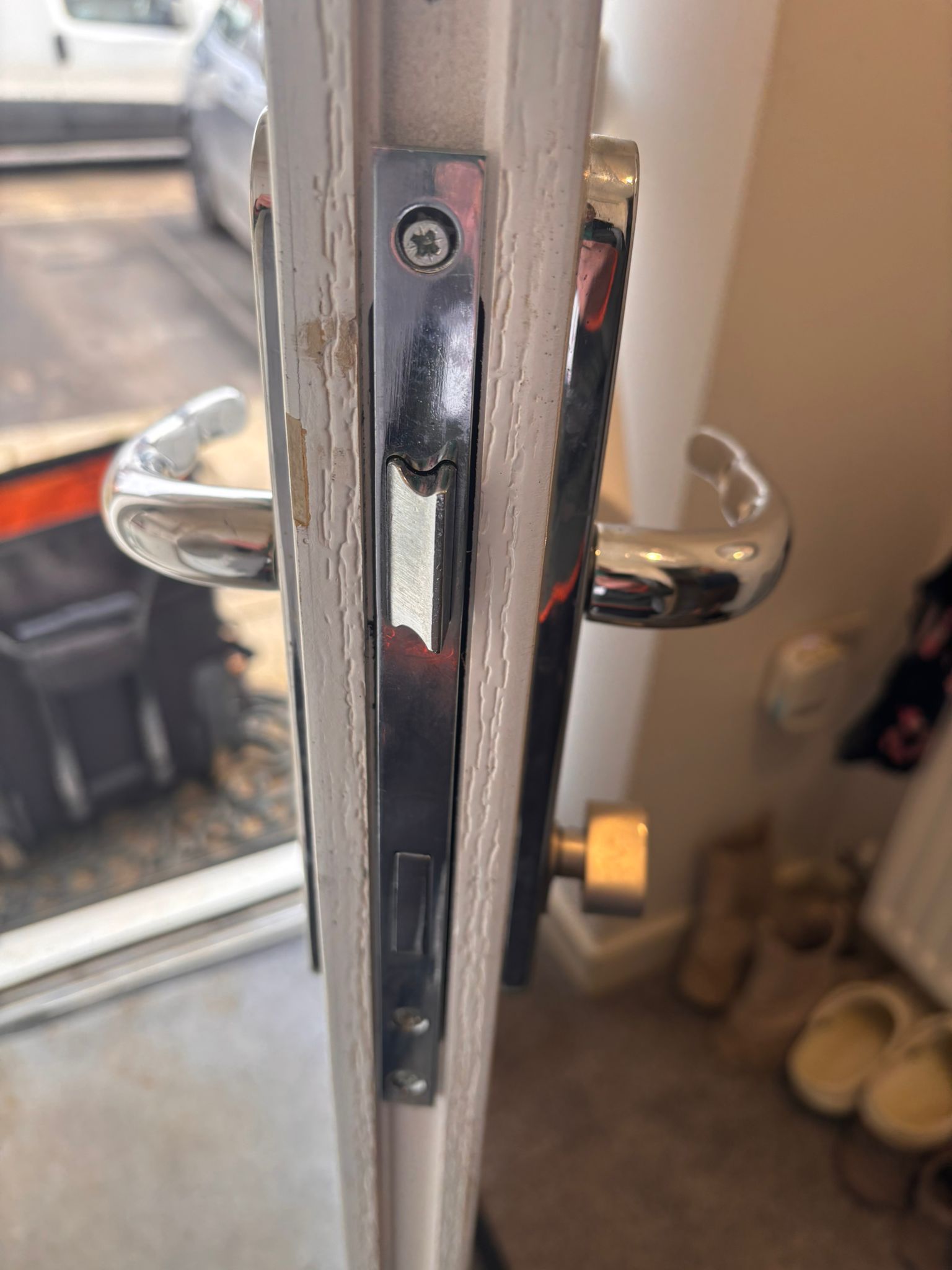
Stiff or difficult-to-turn key is one of the most common lock complaints, particularly in older properties. The cause is usually one of three things: the cylinder is dry and needs lubrication; the door has dropped or warped and the deadbolt or latch is binding against the strike plate; or internal wear has caused the lock mechanism to develop excessive friction. Our engineer will diagnose the cause, lubricate the mechanism with the correct product (graphite for mortice locks, silicone spray for euro cylinders — never WD-40 on locks), and adjust the strike plate if necessary.
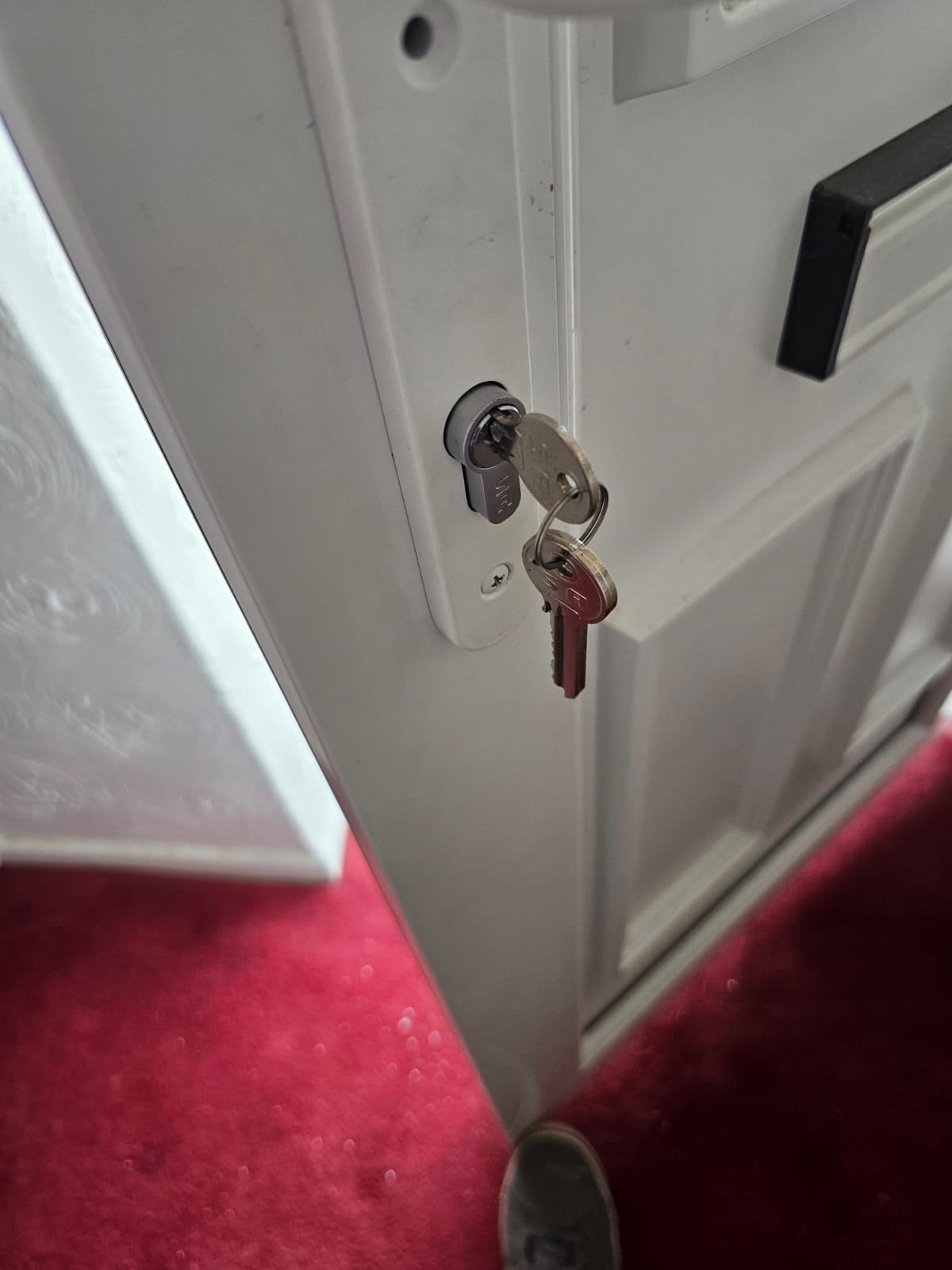
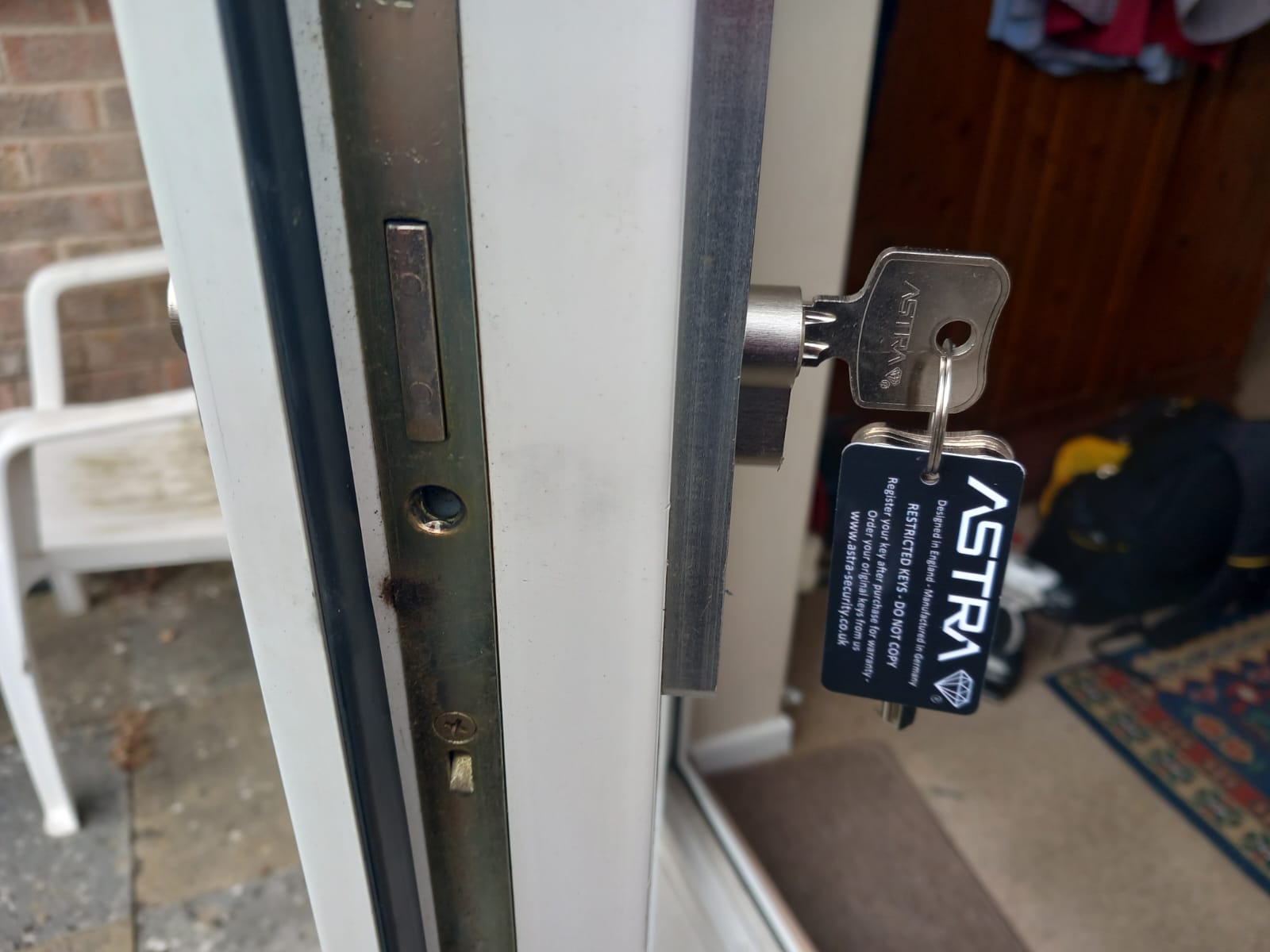
Key not turning at all — If the key enters the lock but will not turn, the cause may be a seized mechanism (often from corrosion or cold weather on an external lock), a worn key that is no longer cutting the pins correctly, or a damaged internal component. Our engineer will assess whether the mechanism can be freed or whether a replacement is required.
Key turns but door does not lock — This usually indicates a problem with the bolt or latch mechanism rather than the cylinder. A deadbolt that does not extend fully, a latch that does not spring back, or a multipoint mechanism that does not engage all its locking points — all of these can be repaired without replacing the entire lock in many cases.
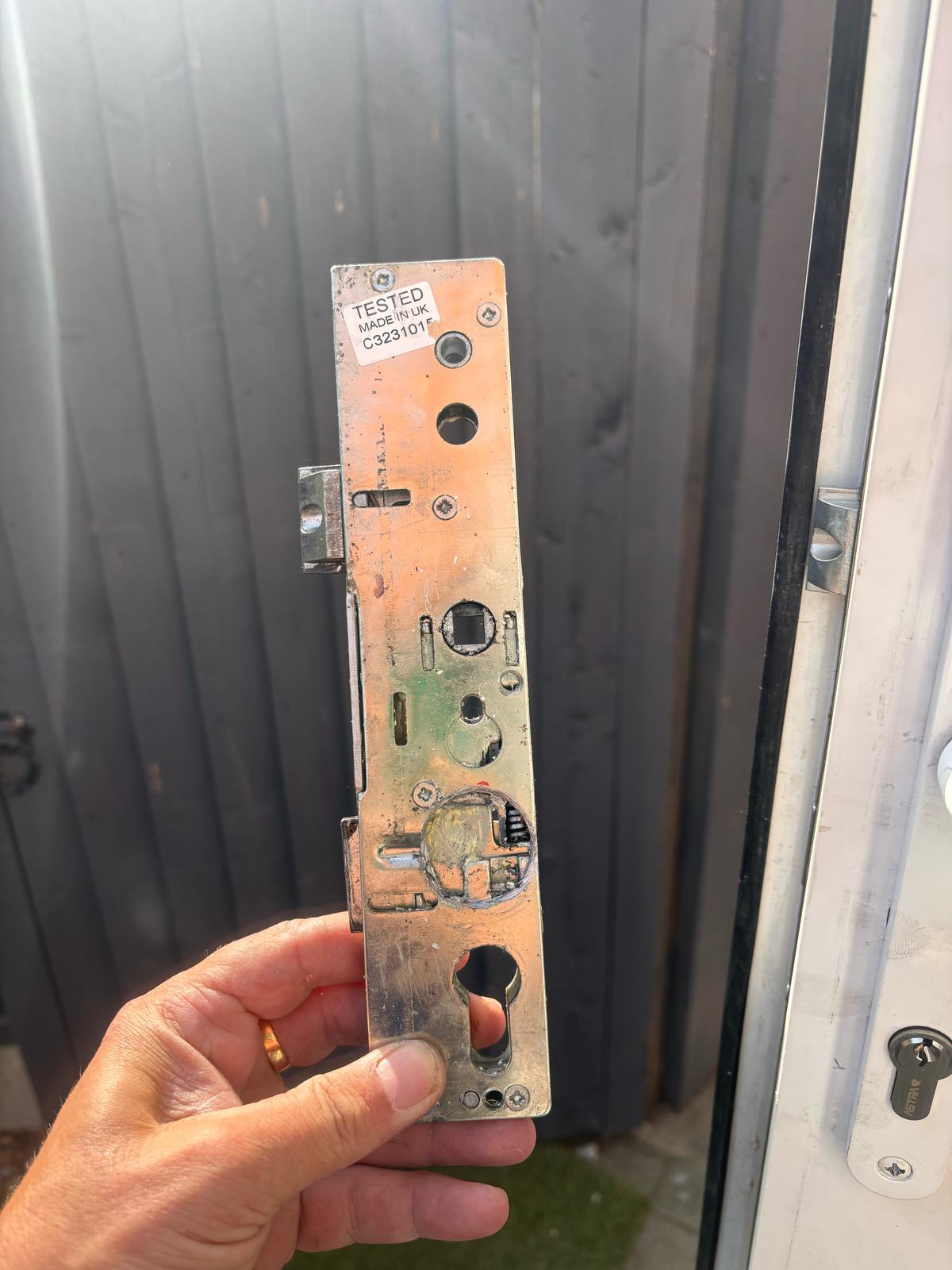
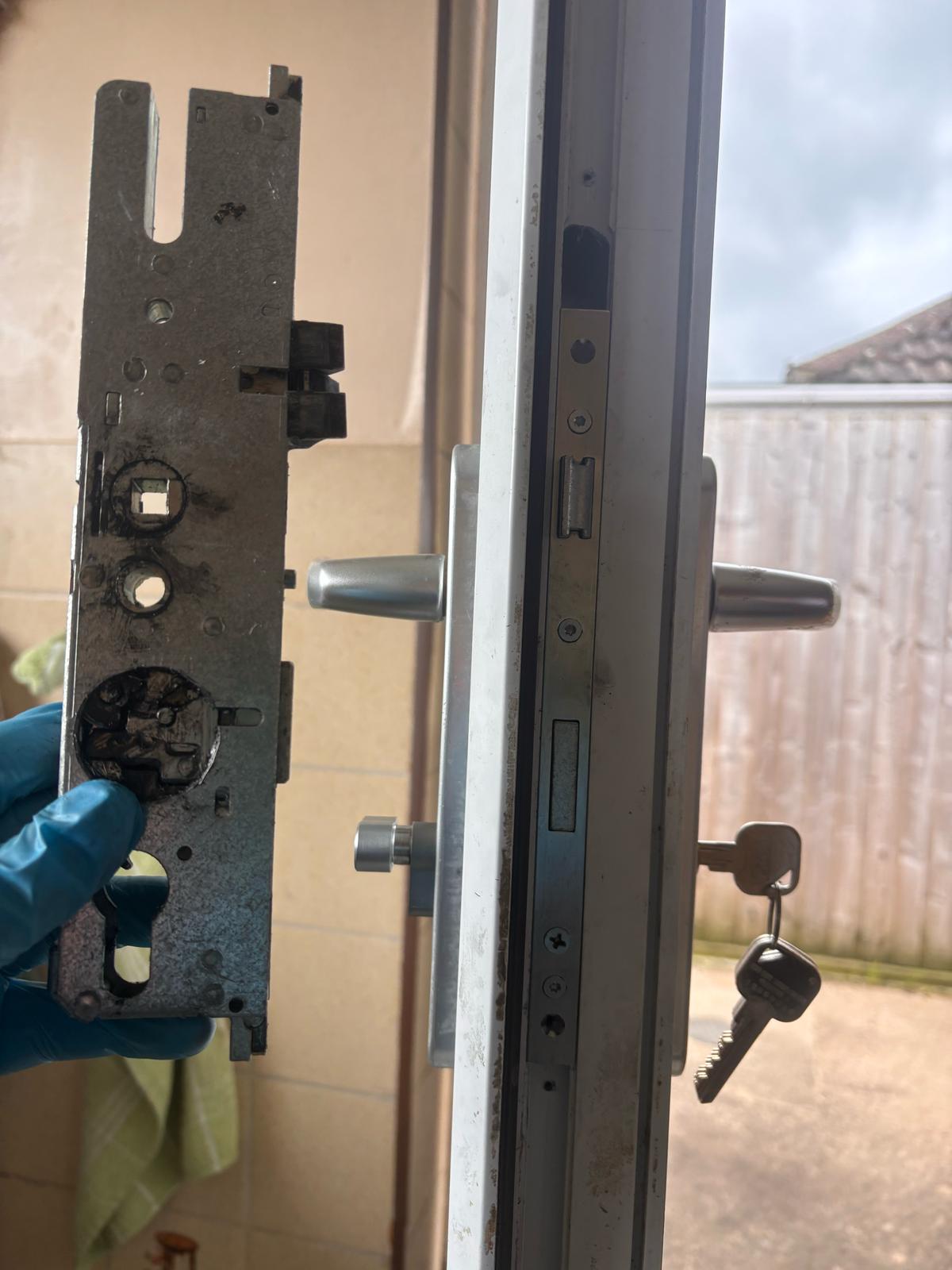
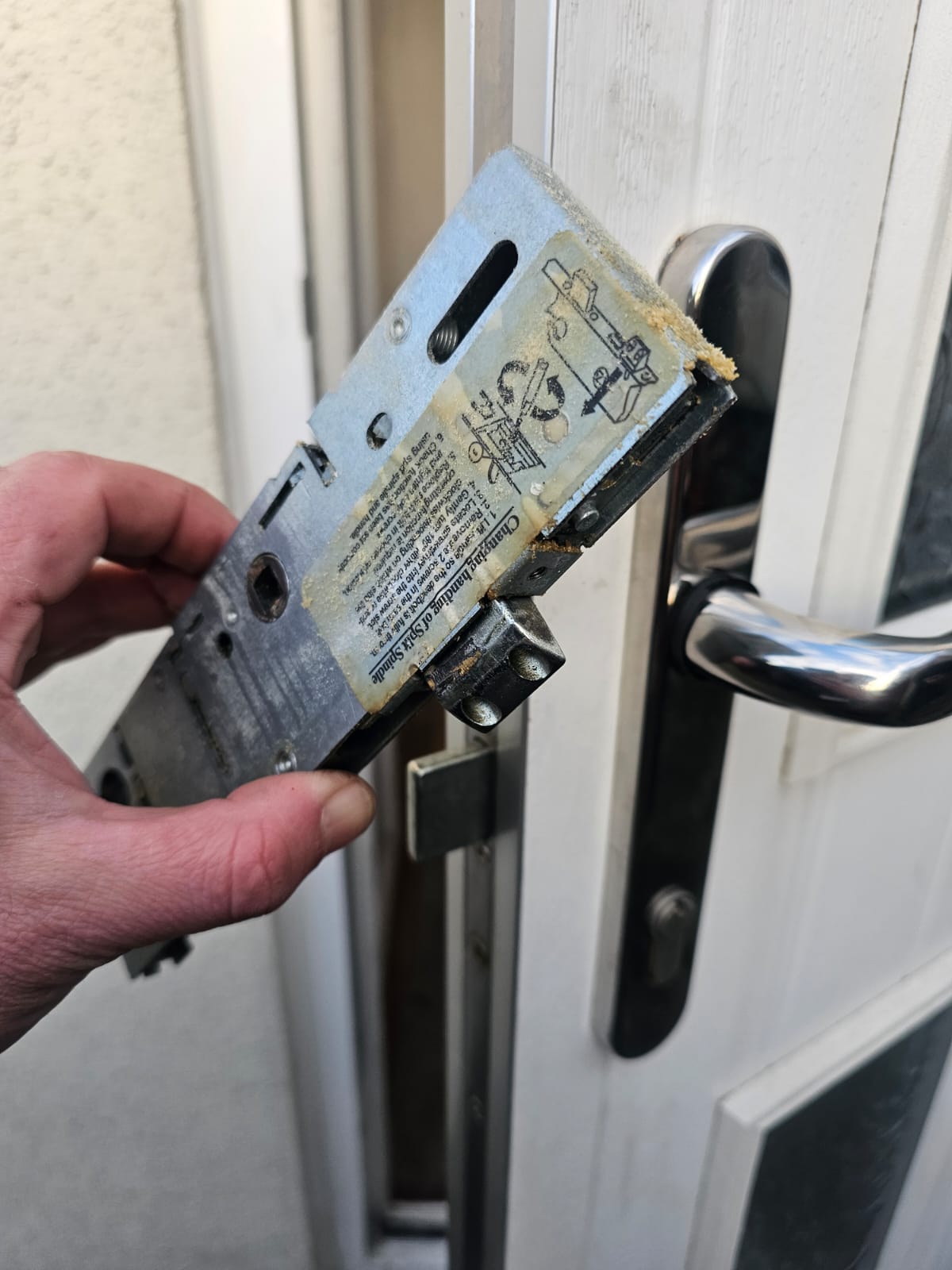
Lock that locks from outside but not inside (or vice versa) — On uPVC multipoint doors, this often indicates a gearbox fault. On mortice locks, it may be a follower or lever fault. On rim latches, it is often a worn snib mechanism. We carry the most common replacement components and can usually fix these on the day.
Broken key extraction — A key that has snapped inside the lock cylinder is a common emergency. Our engineers carry specialist key extraction tools and can remove the broken key section from most cylinders without drilling or damaging the lock. If the key has broken deeply in a worn cylinder, we will advise if a cylinder replacement is the more practical solution.
Loose or wobbly lock — A lock that moves in the door or feels insecure is a safety risk. This is usually caused by loose fixing screws, a worn case, or a case that has been fitted without adequate timber backing. Our engineer will tighten, adjust, or repack the lock as appropriate.
Damaged after attempted break-in — A lock that has been attacked — signs include scratches around the keyhole, a cylinder that spins freely, or a door that no longer closes squarely — should be assessed immediately. Some damage can be repaired; most attacked cylinders should be replaced. Our engineer will give an honest assessment and quote on arrival.
Lubrication and Preventive Maintenance
Many lock problems are caused or accelerated by incorrect lubrication. WD-40 and similar penetrating oils are not lock lubricants — they displace the factory grease and leave a residue that attracts dirt. The correct lubricant for mortice lock mechanisms is fine graphite powder; for euro cylinders and uPVC mechanisms, a PTFE-based spray or silicone spray is appropriate. We carry all of these on our vans and will advise on the correct product for your specific locks.
Strike Plate Adjustment and Door Alignment
A very common cause of stiff or non-locking doors in UK housing stock is door drop or frame movement — a phenomenon particularly prevalent in Victorian and Edwardian terrace properties where original timber frames have settled over a century or more. When the door drops, the deadbolt no longer aligns with its strike plate, and the key becomes very stiff or impossible to turn at the locked position. Our engineers can adjust the strike plate and, where necessary, repack the hinge to correct the alignment without replacing any lock components.
When Repair Is Not the Right Answer
We will always give you an honest assessment. Some locks — particularly cylinders that have been anti-snap attacked, mechanisms that have been flooded or frozen, and very old mortice locks where internal components have cracked — are beyond economical repair. In these cases we will advise replacement and quote accordingly. We never recommend unnecessary replacement; equally, we will not attempt a repair that will fail within weeks and require a return visit at additional cost.
Pricing
Lock repair pricing starts from £49 for a standard lubrication, adjustment, and diagnosis visit. More complex repairs — broken key extraction, strike plate adjustment, component replacement — are priced depending on the work required. All prices are given before work begins. There is no call-out fee.
Call 0330 341 4041 to book a lock repair visit, usually available same day.