

uPVC Door Lock Repair and Replacement
The uPVC door is the dominant door type in British housing built from the 1980s onwards, and the multipoint locking mechanism it uses is one of the most common sources of lock problems our engineers encounter. Unlike a simple cylinder lock, a uPVC multipoint mechanism has multiple locking points — hooks, rollers, and deadbolts — that engage into the frame simultaneously when the key is turned. When this mechanism develops a fault, the door may become impossible to lock, impossible to open, or both. Our engineers specialise in uPVC door lock diagnosis, repair, and replacement across all major mechanism brands.
How uPVC Multipoint Locks Work
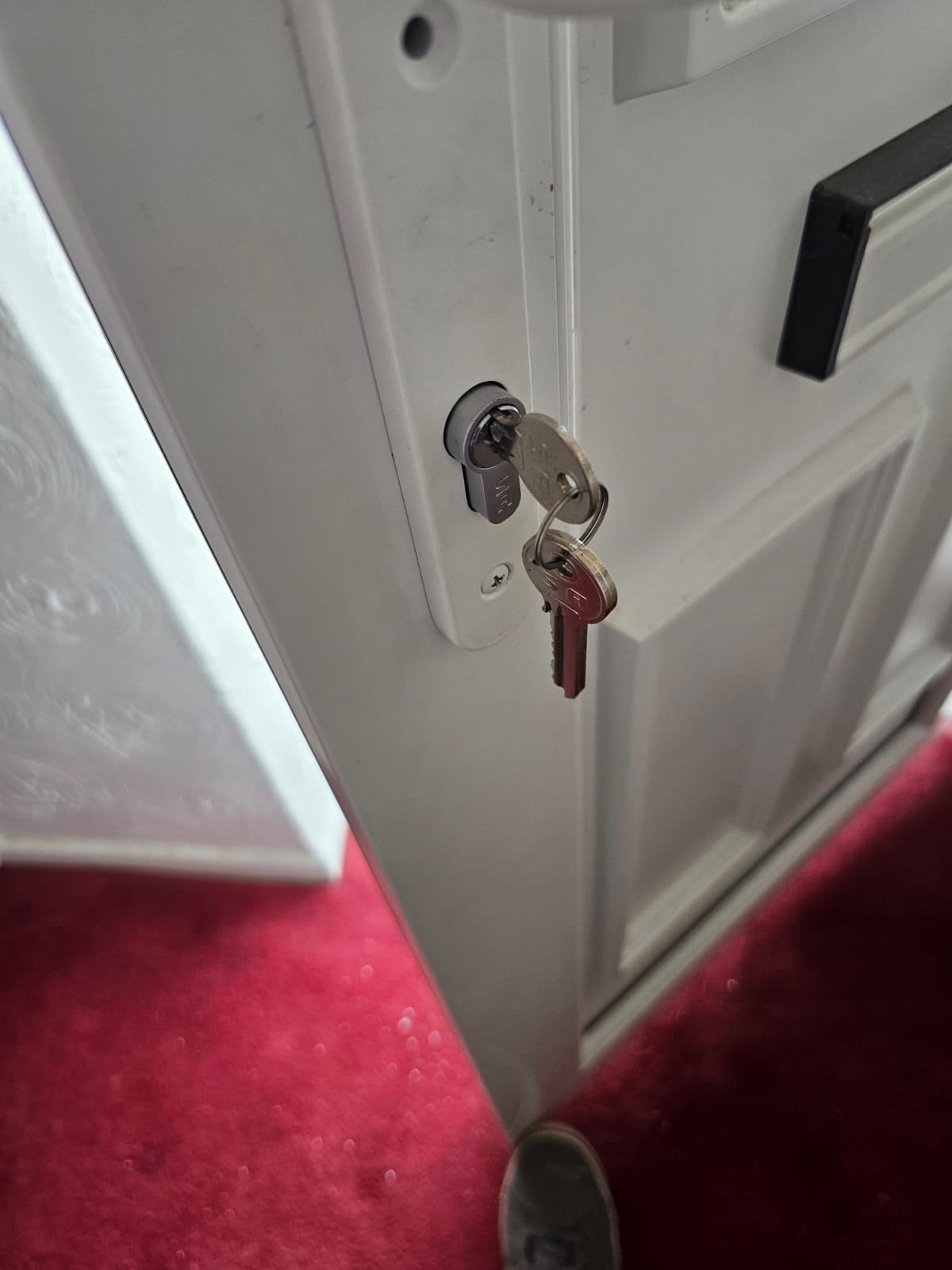
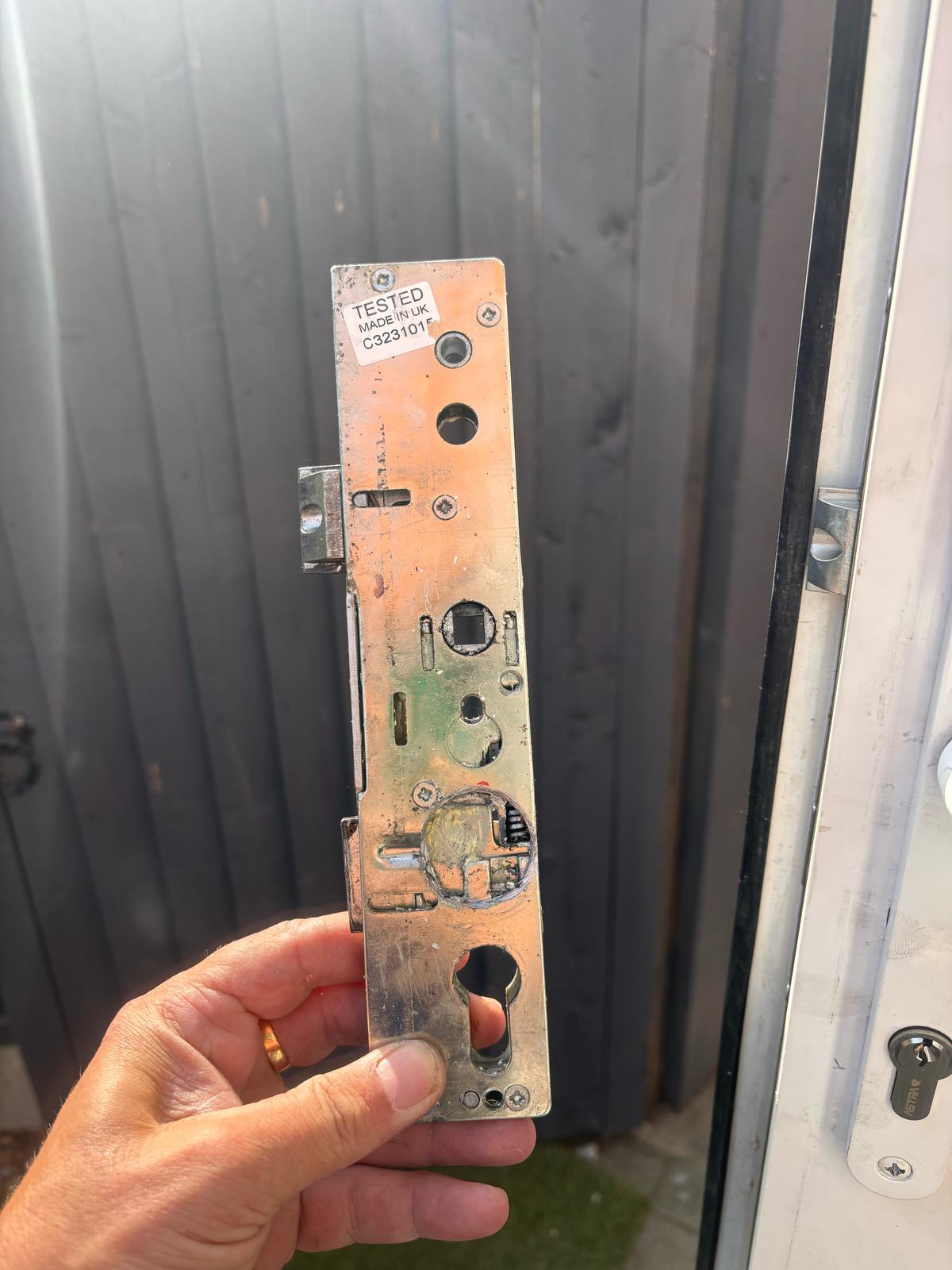
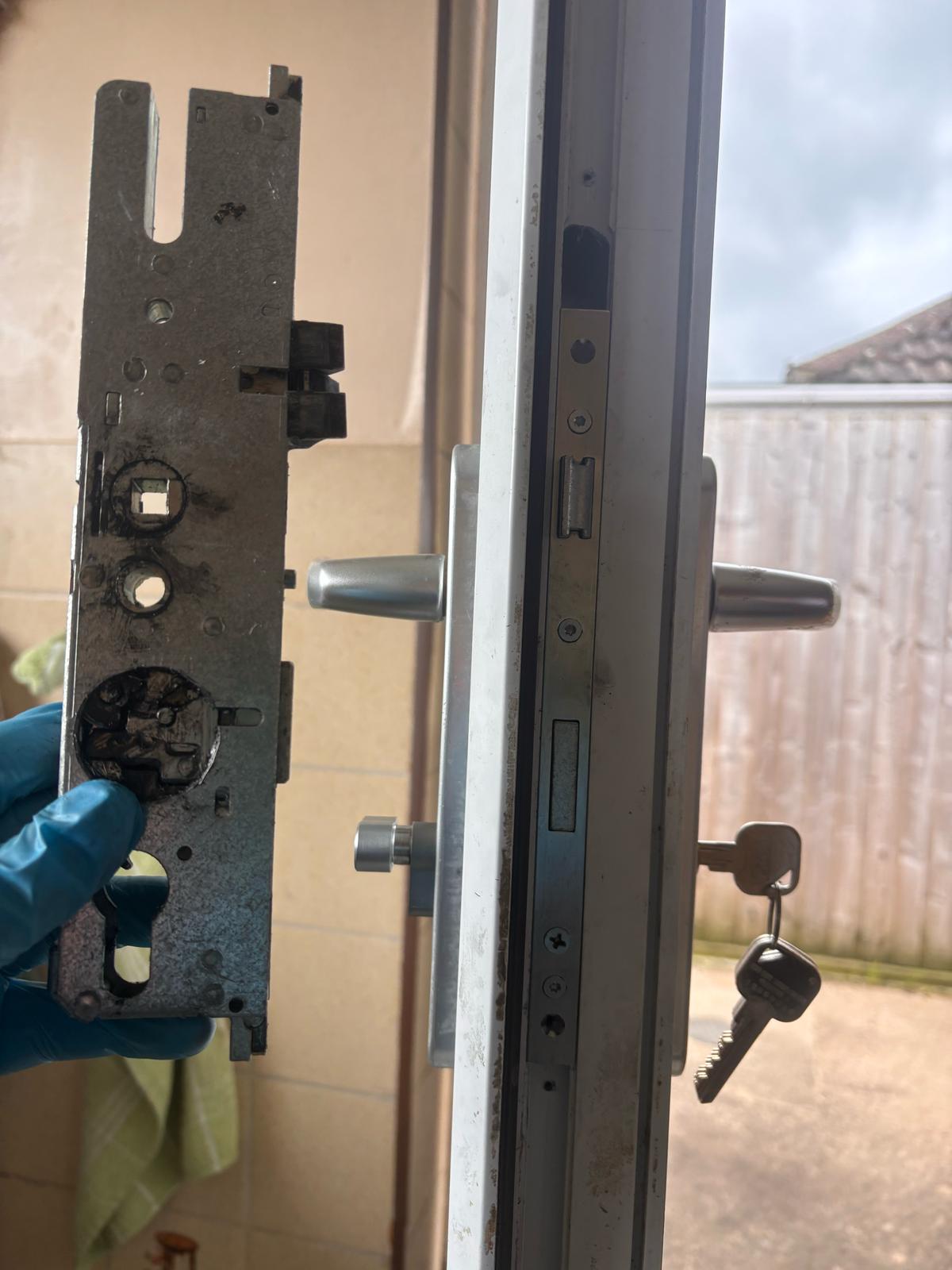
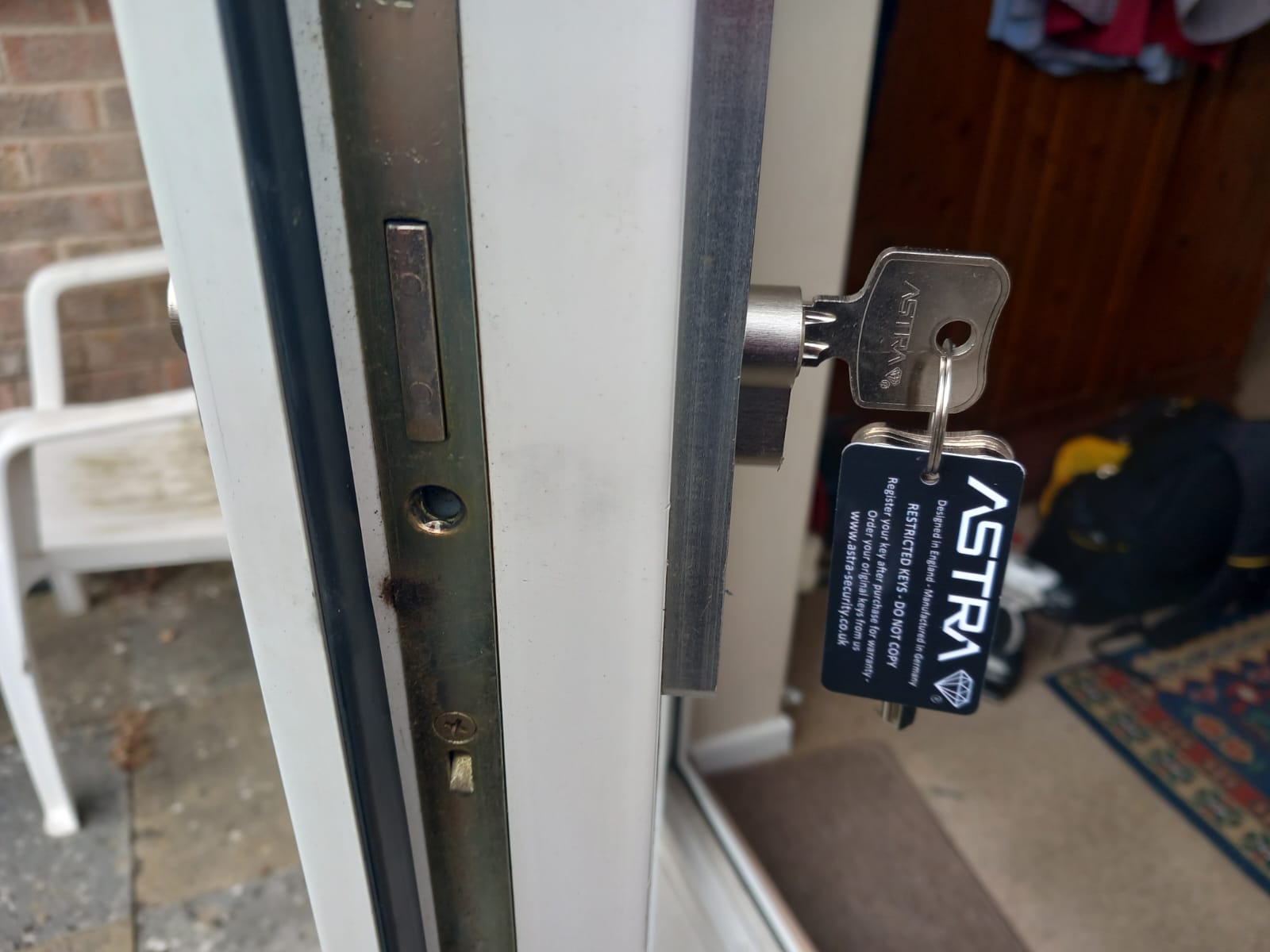
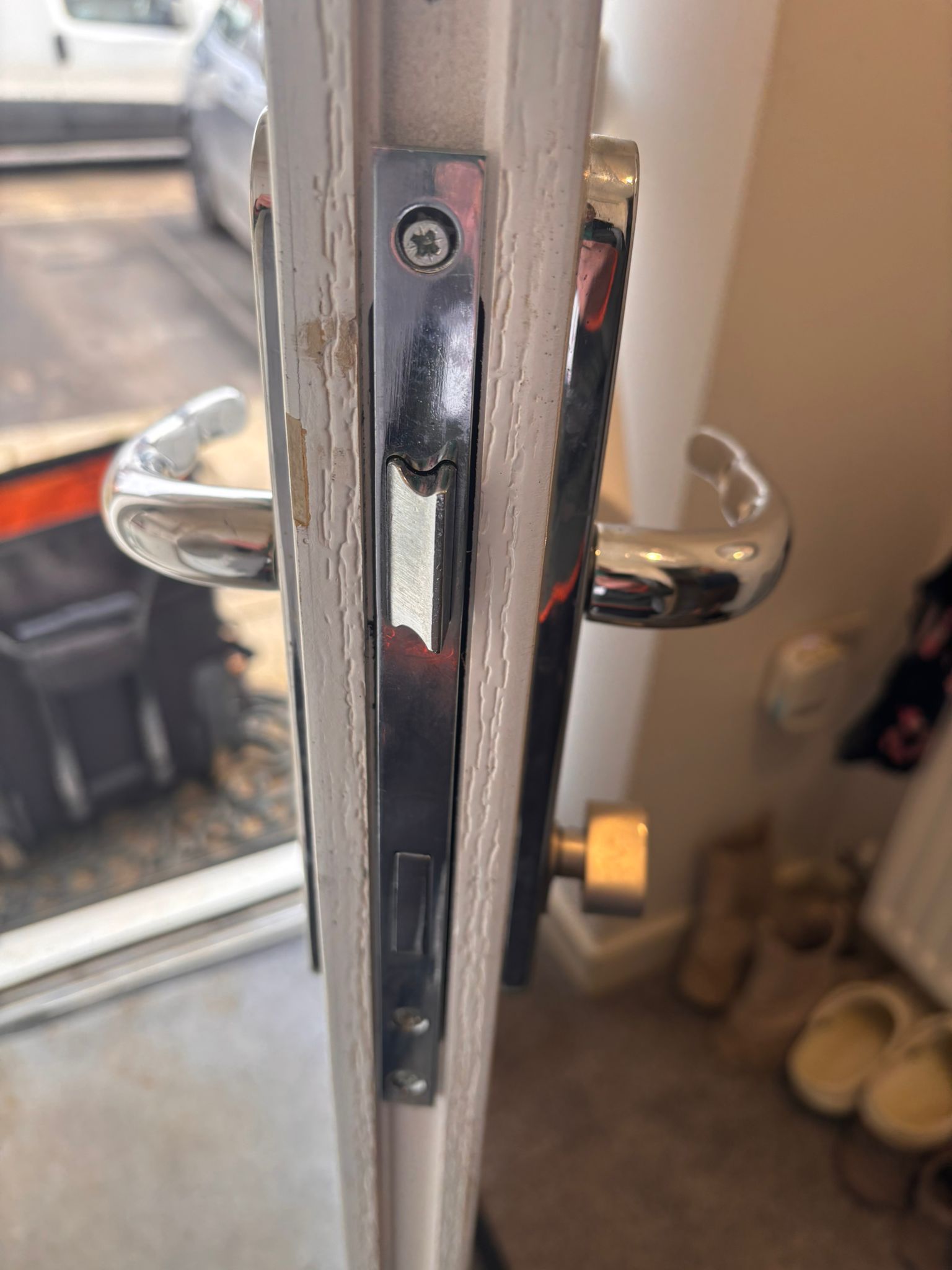
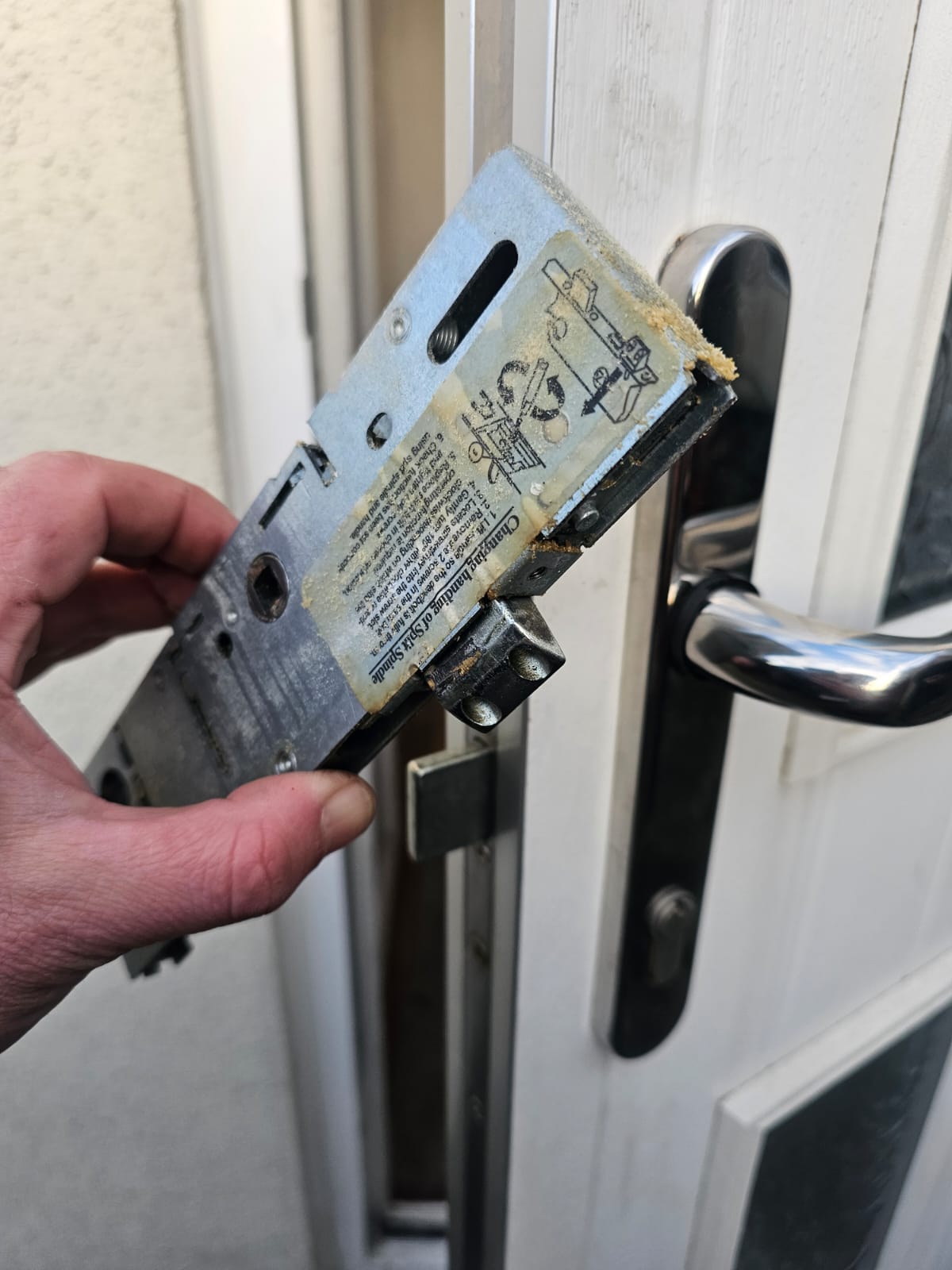
A uPVC door lock consists of two main components: the euro cylinder (the barrel you turn with a key, set into the door at handle height) and the multipoint locking mechanism (the strip running up and down the door edge that contains the hooks, bolts, and rollers). The handle lifts the latch and prepares the mechanism; turning the key extends all locking points simultaneously. When either component fails, the door may not lock, not open, or not do both.
The most common failure mode is gearbox failure — the gearbox is the central component of the mechanism that translates key and handle movement into locking-point engagement. Gearboxes wear out through normal use over time, typically after 10-15 years of regular operation. Signs of gearbox failure include a handle that has become very stiff or has dropped, locking points that do not extend fully when the key is turned, or a grinding sensation when operating the handle.
Common uPVC Lock Problems
- Handle has dropped — The handle is loose, drooping, or no longer springing back to the horizontal position. Usually a gearbox or handle mechanism fault.
- Door will not lock — The key turns but the locking points do not engage the frame. Gearbox fault, mechanism misalignment, or frame movement.
- Door locked and will not open — The key turns but the locking points do not retract. Emergency situation requiring immediate attention; sometimes a gearbox fault, sometimes a cylinder fault.
- Key turns but nothing happens — The cylinder spins freely, indicating the cylinder has been snapped (security failure) or the link between cylinder and mechanism has failed.
- Door is difficult to lock — The key turns with significant effort. Usually caused by the door being misaligned so the locking points bind against the frame, rather than a mechanism fault per se.
- Only some locking points engage — The mechanism operates but one or more hooks or bolts do not extend. Sometimes a mechanism alignment issue; sometimes a worn or broken component within the mechanism.
Diagnosis: Repair vs Replacement
Our engineers carry a comprehensive toolkit for uPVC door lock diagnosis. In many cases, what appears to be a mechanism failure is actually a door alignment problem — the door has sagged on its hinges, or the frame has moved, and the locking points are fouling the keeps in the frame rather than entering them cleanly. Hinge adjustment or keep adjustment can solve this without replacing any lock components. We assess alignment before advising on mechanism replacement.
Where the gearbox or mechanism is genuinely faulty, we carry a stock of the most commonly fitted replacement mechanisms, including Maco, Winkhaus, Roto, ERA, Yale, and Avocet. These cover the vast majority of uPVC doors fitted in UK housing from the mid-1990s onwards. Less common or older mechanisms may need to be sourced, in which case we will advise on lead time and temporary securing options.
Cylinder Replacement on uPVC Doors
The euro cylinder on a uPVC door can be replaced independently of the mechanism, and this is usually advisable even when the mechanism itself is fine — particularly if the cylinder is more than 10 years old or shows signs of wear. We recommend upgrading to a snap-resistant cylinder (often called anti-snap) on all uPVC doors, as the long-format cylinders required for uPVC doors are more vulnerable to the snap attack method used by burglars than the shorter cylinders on composite or timber doors. We carry Ultion, Yale Platinum, and ERA Fortress cylinders in the sizes required for uPVC door applications.
Composite Door Locks
We also repair and replace locks on composite doors — the higher-specification alternative to uPVC that uses a glass-reinforced plastic skin over a timber or foam core. Composite doors typically use the same euro cylinder and multipoint mechanism principle as uPVC doors, though some premium composite door brands (Solidor, Rockdoor, Endurance) use proprietary high-security cylinders as standard. We carry cylinders and mechanisms for the most common composite door brands.
Emergency Out-of-Hours Service
A uPVC door that is locked and will not open is an emergency. Our engineers are available 24 hours a day for exactly this situation. If you are locked inside or outside your property because a uPVC mechanism has failed, call us immediately on 0330 341 4041. We aim to reach you within 20 minutes and carry the necessary tools and parts to resolve most uPVC emergencies at a single visit.
Pricing
uPVC cylinder replacement starts from £79 including a high-security anti-snap cylinder. Gearbox or mechanism replacement starts from £120 including parts. Full diagnosis and same-day repair is available in the vast majority of cases. All prices are given upfront; there is no call-out fee.